
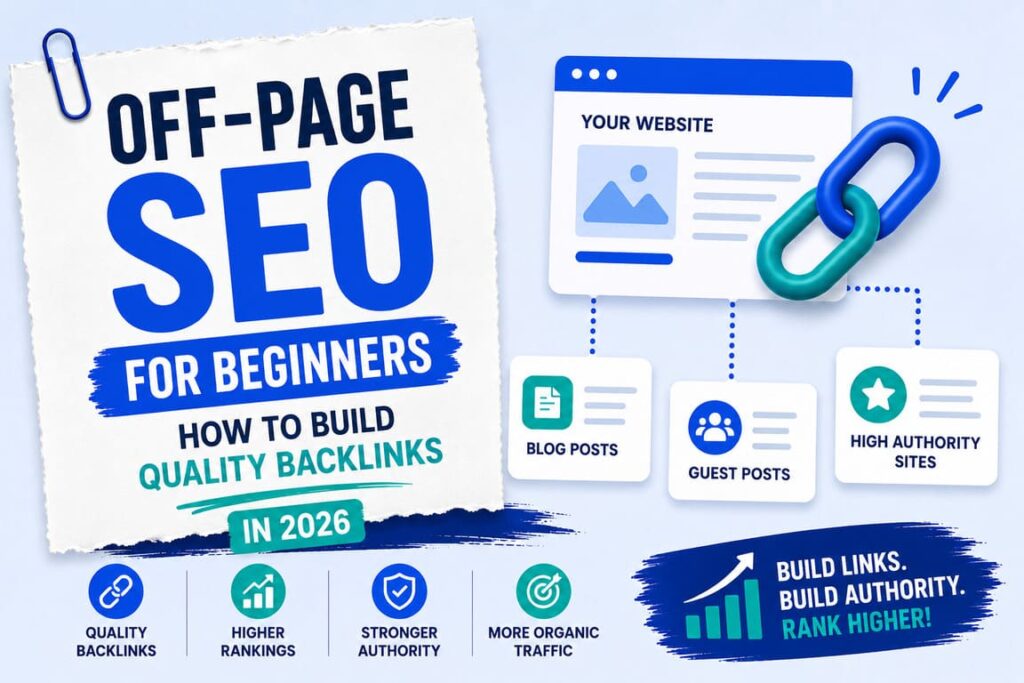
Off-page SEO is the work you do away from your own website to build its trust and reputation. The biggest part is backlinks, which are links from other websites to yours. Each one acts like a vote of confidence. The golden rule is quality over quantity. A few links from trusted, relevant sites beat hundreds of weak ones.
On-page SEO is what you do on your own pages. Off-page SEO is how the rest of the web treats you. When good sites link to you, Google sees your content as more trustworthy, and your rankings rise.
What Is Off-Page SEO?
Off-page SEO is everything you do away from your own site to build trust and authority. The main part is earning backlinks, but it also includes brand mentions and a good reputation across the web. In short, it is the web vouching for you.
What Is a Backlink?
A backlink is simply a link from another website to yours. When a site links to you, Google reads it as a vote of confidence, a sign that your content is worth pointing to. The more votes you get from trusted sites, the more Google trusts you. But not every link is equal, which leads to the next part.
What Makes a Backlink “Quality”?
One strong link can be worth more than a hundred weak ones. A quality backlink usually has these traits:
- It comes from a real, trusted site with actual readers.
- The site is about your topic or a closely related one.
- The link sits naturally inside the content, not in a footer or a random list.
- It was earned, not bought.
7 Beginner-Friendly Ways to Build Backlinks
Start with one method, try it a few times, then move to the next.
1. Create content worth linking to
No one links to thin pages. Before anything else, make something genuinely useful, like a clear guide, original tips, or your own data. This is the foundation, and every other tactic depends on it.
2. Claim your unlinked brand mentions
Sometimes a site mentions your name without linking to you. This is the easiest link to win. Search Google for your site name, find mentions with no link, and send a friendly email asking them to add one.
3. Write guest posts on relevant blogs
Offer to write a helpful article for another blog in your niche. In return, you usually earn a link back. Pick real, relevant sites and write something truly good. Avoid low quality sites that accept anything, since those links do not help.
4. Try broken link building
Find a dead link on another site, then offer your own page as a replacement. It helps them fix a problem and earns you a link at the same time, so it is a friendly approach that people welcome.
5. Get listed on resource pages
Many sites have a “useful resources” or “helpful links” page. If you have a page that fits, email the owner and suggest it. Search Google for your topic plus “useful resources” to find these pages.
6. Be a source for writers
Writers and journalists often look for quick expert tips. Answer their requests with a short, helpful reply, and you can earn a link from a strong site. Free services exist that connect sources with writers who need them.
7. Build real relationships in your niche
Comment helpfully, share other people’s work, and join your community. Over time, people get to know you and link to you on their own. This is slow, but these natural links are the most trusted of all.
Backlink Mistakes That Can Hurt You
Some shortcuts do more harm than good. Avoid these:
- Buying links. This breaks Google’s rules and can get your site penalized.
- Mass directories and spammy, low quality sites.
- Swapping links with many sites just to trade links.
- Using the same exact keyword as your link text over and over, which looks unnatural.
- Getting a sudden burst of links from random sites, which looks fake to Google.
How Long Until Backlinks Work?
Backlinks are not instant. Most take about one to four months to affect your rankings, and the effect grows as you earn more good links over time. So be patient, keep your focus on quality, and let your authority build steadily.
Frequently Asked Questions
What is off-page SEO?
It is the SEO work you do away from your own site to build trust, mostly by earning backlinks from other websites.
What is a backlink?
A link from another website to yours. Google treats it like a vote of confidence in your content.
How many backlinks do I need?
There is no fixed number. A few links from trusted, relevant sites are worth far more than hundreds of weak ones.
Can I buy backlinks?
You can, but you should not. Buying links breaks Google’s rules and can get your site penalized. Earn them instead.
Do backlinks help with AI search?
Yes. In 2026, links and brand mentions also help AI tools like ChatGPT and Google AI trust and cite your site.
Final Words
Off-page SEO comes down to one simple idea. Earn trust from the rest of the web by being worth linking to. Start by creating something genuinely useful, then build a handful of quality links through honest methods like guest posts, unlinked mentions, and real relationships. Skip the shortcuts that can get you penalized, and let your authority grow over time.
This is the third piece of a strong SEO foundation. Pair it with my on-page SEO checklist and my technical SEO checklist, and if you are just starting out, begin with what SEO is and how it works.
