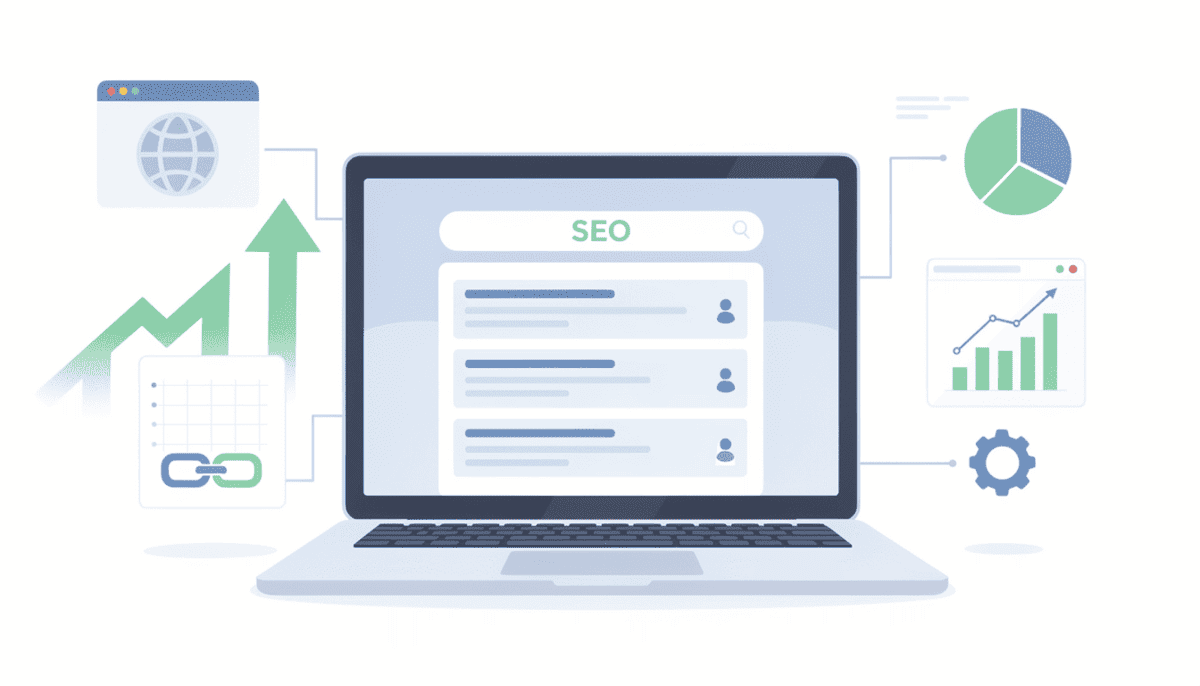

SEO helps websites appear in Google search results when people search for related topics. This guide explains what SEO is, how search engines work, and how beginners can start doing SEO effectively in 2026.
What Is SEO?
SEO (Search Engine Optimization) means optimizing your website so search engines can understand your content and show it to users when they search for related topics.
The primary objective of SEO is to earn higher rankings for relevant searches and attract consistent, high-quality organic traffic without relying on paid advertising.
Modern SEO focuses on:
- Creating accurate, helpful, and experience-based content
- Ensuring search engines can crawl and index pages correctly
- Demonstrating topical authority and trustworthiness over time
In 2026, SEO is no longer about manipulating algorithms. It is about proving expertise, delivering real value, and building long-term credibility with both users and search engines.
Simple SEO Example
If someone searches for: “best free SEO tools” And your blog appears on page 1 of Google, that traffic came from SEO.
SEO vs Paid Ads
| SEO | Paid Ads |
|---|---|
| Free traffic | Paid traffic |
| Long-term results | Instant but stops when money stops |
| Builds authority | No long-term value |
SEO does not deliver instant results, but it builds sustainable, long-term growth that scales as your website gains authority and trust.
How Search Engines Work
To apply SEO effectively, it is essential to understand how search engines discover, store and rank web pages. Search engines follow a fixed system with 3 stages.
1. Crawling
Search engines use automated programs known as crawlers (or bots) to discover content across the web. Crawlers continuously scan the internet to find new pages and detect updates to existing ones. Search engines discover pages by:
- Following internal and external links
- Reading XML sitemaps submitted by websites
- Detecting newly published or updated content
If a page cannot be crawled, it cannot appear in search results.
2. Indexing
Once a page is crawled, search engines analyze and store its content in a massive database known as the search index. During indexing, search engines evaluate the page’s content, structure, and relevance. Pages that are not indexed:
- Will not appear in search results
- Cannot rank for any keyword
Proper indexing is a foundational requirement for SEO.
3. Ranking
When a user performs a search, Google:
- Interprets the search intent behind the query
- Retrieves relevant pages from its index
- Ranks those pages based on hundreds of ranking signals
These signals include content quality, relevance, usability, authority, and trust.
Why This Matters for SEO
The purpose of SEO is to help search engines clearly understand your content, trust its accuracy, and recognize its value compared to competing pages. Websites that align with how search engines crawl, index, and rank content are far more likely to achieve stable, long-term visibility
Types of SEO You Must Know
SEO includes three connected areas that guide content creation, site structure, and authority signals for better search visibility online growth
On-Page SEO
On-page SEO focuses on optimizing individual pages. Key elements:
- High-quality content
- Title tags & meta descriptions
- Proper headings (H1, H2, H3)
- Keyword optimization
- Internal linking
- Image optimization
Off-Page SEO
Off-page SEO focuses on external signals. Main factors:
- Backlinks from other websites
- Brand mentions
- Website authority
- Trust signals
Good backlinks = higher trust.
Technical SEO
Technical SEO helps search engines crawl and index your site properly. Important factors:
- Website speed
- Mobile friendliness
- HTTPS security
- XML sitemap
- Clean URL structure
How SEO Works Step by Step
SEO follows a practical workflow. Each step builds progress and supports the next action.
- Keyword research – find what people search for
- Create helpful content – answer search intent
- Optimize pages – on-page SEO
- Build backlinks – off-page SEO
- Track results – improve continuously
SEO is not a one-time task. It is an ongoing process.
Keyword Research for Beginners (2026 Method)
Keywords are words or phrases people type into search engines.
Types of Keywords
- Short-tail: “SEO”
- Long-tail: “what is SEO and how it works”
Long-tail keywords are easier to rank and convert better.
Search Intent Matters
Every keyword has intent:
- Informational (learn)
- Navigational (find)
- Commercial (compare)
- Transactional (buy)
Always match your content with search intent.
Free Keyword Research Tools
- Google Search suggestions
- Google “People Also Ask”
- Google Search Console
- Free SEO tools
Choose keywords with:
- Low competition
- Clear intent
- Decent search volume
Content Optimization Basics
Content is the foundation of SEO in 2026.
Best Practices
- Write for humans first
- Answer questions clearly
- Use headings properly
- Include keywords naturally
- Avoid keyword stuffing
Content Length
There is no fixed word count, but complete content wins. Focus on:
- Covering the topic fully
- Adding real value
- Updating content regularly
Technical SEO Basics (Non-Technical Explanation)
This part focuses on essential technical elements that support search access and smooth website performance without advanced setup.
Page Speed
Fast websites rank better and convert more users.
Mobile-First Indexing
Google ranks your mobile version first, not desktop.
Core Web Vitals
Google measures:
- Loading speed
- Interactivity
- Visual stability
You don’t need to be a developer—just use a good theme and hosting.
Sitemap & Robots.txt
- Sitemap helps search engines find pages
- Robots.txt controls crawling behavior
SEO Trends in 2026 You Should Know
SEO keeps evolving. In 2026, these trends matter most:
- AI-powered search results
- Voice search growth
- E-E-A-T (Experience, Expertise, Authority, Trust)
- Zero-click searches
- User experience as a ranking factor
SEO is no longer about tricks—it’s about value.
Common SEO Mistakes Beginners Make
Avoid these mistakes:
- Targeting very competitive keywords
- Copying content from other sites
- Ignoring technical SEO
- Buying low-quality backlinks
- Expecting fast results
SEO rewards patience and consistency.
How Long Does SEO Take to Show Results?
SEO results appear gradually as search engines process pages, test relevance, and build trust signals through consistent optimization, accurate content, and steady performance improvements over time.
Typical timeline:
- 1 month: Indexing & small improvements
- 3 months: Ranking movement
- 6 months: Traffic growth
- 12 months: Strong authority
If someone promises instant SEO results, it’s a red flag.
Best Free SEO Tools for Beginners
Free SEO tools support beginners during early website growth. They provide search data, traffic insights, keyword ideas, and technical checks, helping users monitor performance, fix issues, and improve visibility without spending money at the starting stage.
Free tools to support basic SEO tasks
- Google Search Console
- Google Analytics
- Keyword research tools
- Website audit tools
These tools help you measure and improve SEO performance.
SEO vs PPC: Which Is Better for Beginners?
SEO is best if:
- You want long-term traffic
- You have limited budget
- You want brand authority
PPC is best if:
- You need instant traffic
- You have ad budget
- You’re testing offers
For beginners, SEO is the smarter starting point.
FAQs About SEO
Is SEO free?
Yes, but it requires time and effort.
Can beginners do SEO?
Yes. SEO is beginner-friendly if learned step by step.
Is SEO dead in 2026?
No. SEO is evolving, not dying.
How much traffic can SEO bring?
Unlimited depending on content quality and consistency.
Final Thoughts
SEO follows a structured process that helps search engines trust content. Beginners should master basics, publish helpful pages, stay consistent, and allow time for growth through steady effort and patience.